 Get in Touch
Get a Quote

An HGV reversing camera system closes the near-side, rear and cab-height blind zones that door mirrors cannot reach, and in 2026 it is usually the first fix a transport manager reaches for after a yard scrape or a pedestrian near-miss. HGV cabs sit higher and longer than vans, so the blind area behind and beside the trailer is bigger, and a single rear-view camera rarely covers it on its own.
- An HGV reversing camera system needs near-side, rear and cab-height coverage, not one rear camera alone.
- Crystal Ball’s 360 Camera System is configured per vehicle and quoted individually, not sold as a fixed kit.
- DVS Kit is a separate Greater London compliance requirement and does not replace general reversing visibility.
- Reviewing footage after every near-miss, not just after a collision, is what actually reduces repeat incidents in 2026.
Why reversing camera coverage matters for HGV fleets
A rigid or artic HGV has blind zones a car or van driver never has to think about: directly behind the trailer, down the near-side from the cab to the rear wheels, and immediately in front of a cab-over unit. Mirrors help with the off-side and some of the rear, but they cannot show a pedestrian standing close to the near-side kerb or a bollard tucked under the cab line.
Reversing incidents in a yard or on a narrow site access road tend to be low-speed but high-cost: trailer damage, third-party vehicle damage, and in the worst cases a pedestrian injury that triggers a DVSA or Traffic Commissioner enquiry. A fleet that can show it has reduced HGV blind spots with a 360 degree camera system and a documented reversing procedure is in a stronger position when an incident is investigated, whether that is an insurer, a client site manager or the Traffic Commissioner.
This guide covers the practical steps for fitting and running reversing camera coverage on HGVs, where Crystal Ball's 360 Camera System fits into that, and where it stops and a separate DVS solution starts.
Map your HGV blind spots before you buy anything
Start with the vehicle, not the camera brochure. Every HGV in the fleet has a slightly different blind spot profile depending on cab height, trailer length and mirror specification.
- Walk around each vehicle type at ground level and mark where a person or object disappears from the driver's direct and mirror view
- Check the manufacturer's mirror specification sheet for the documented blind zones on that model
- Log every reversing near-miss reported by drivers, yard staff or site security for at least a month
- Note the routes and locations where reversing actually happens: loading bays, narrow yards, residential drop points, site access roads
- Separate near-side issues from rear issues and cab-height issues, because they usually need different camera positions to fix
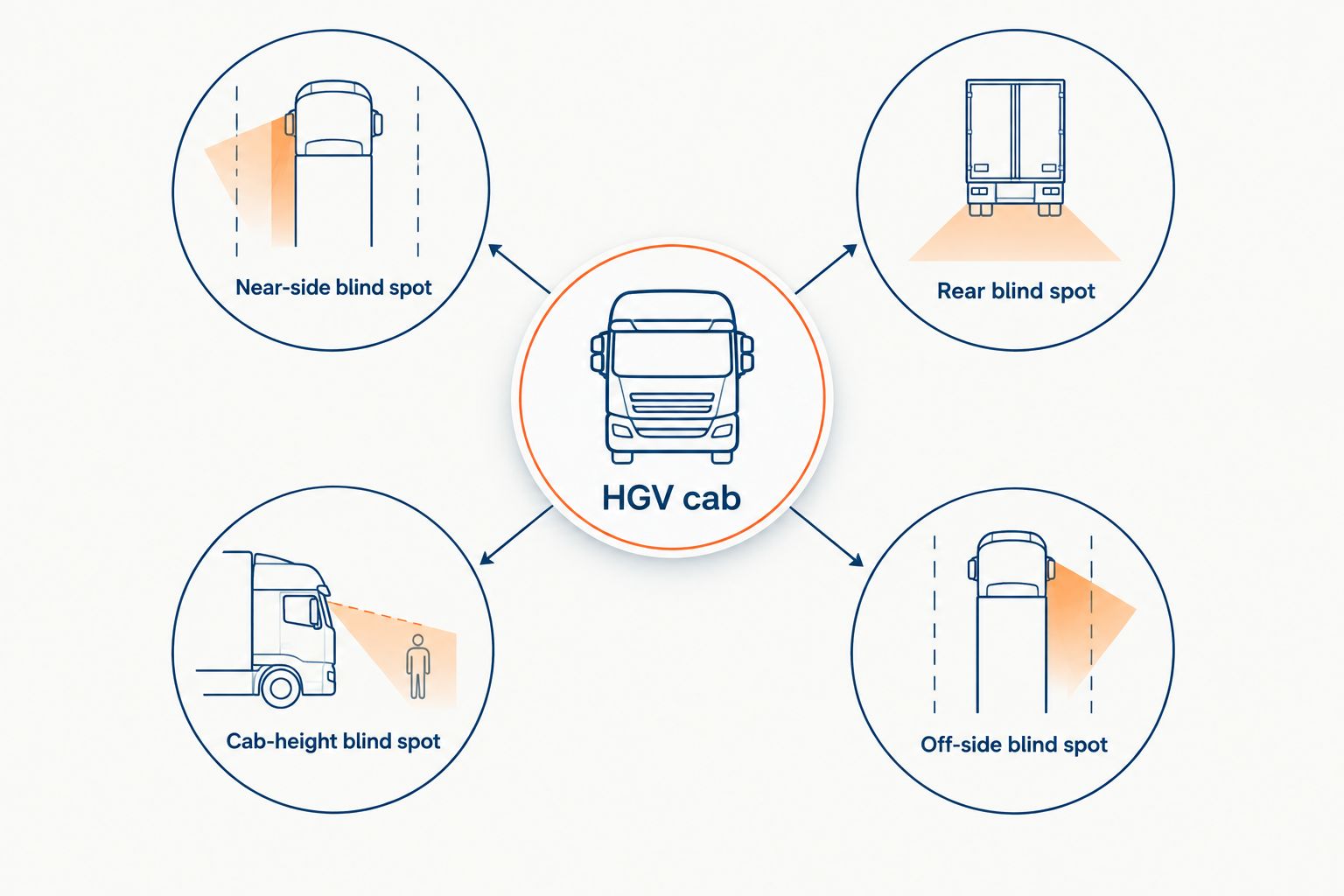
Fit near-side, rear and cab-view camera coverage
Once the blind zones are mapped, camera positions follow logically rather than being guessed at. A single rear-view unit only ever solves part of the problem.
- Cover the rear reversing arc with a dedicated rear-facing camera, not just a reversing sensor beep
- Add near-side coverage along the full length of the vehicle, not only at the cab
- Check rear camera coverage for commercial vehicles matches the trailer length actually run, since a rigid and an artic need different fields of view
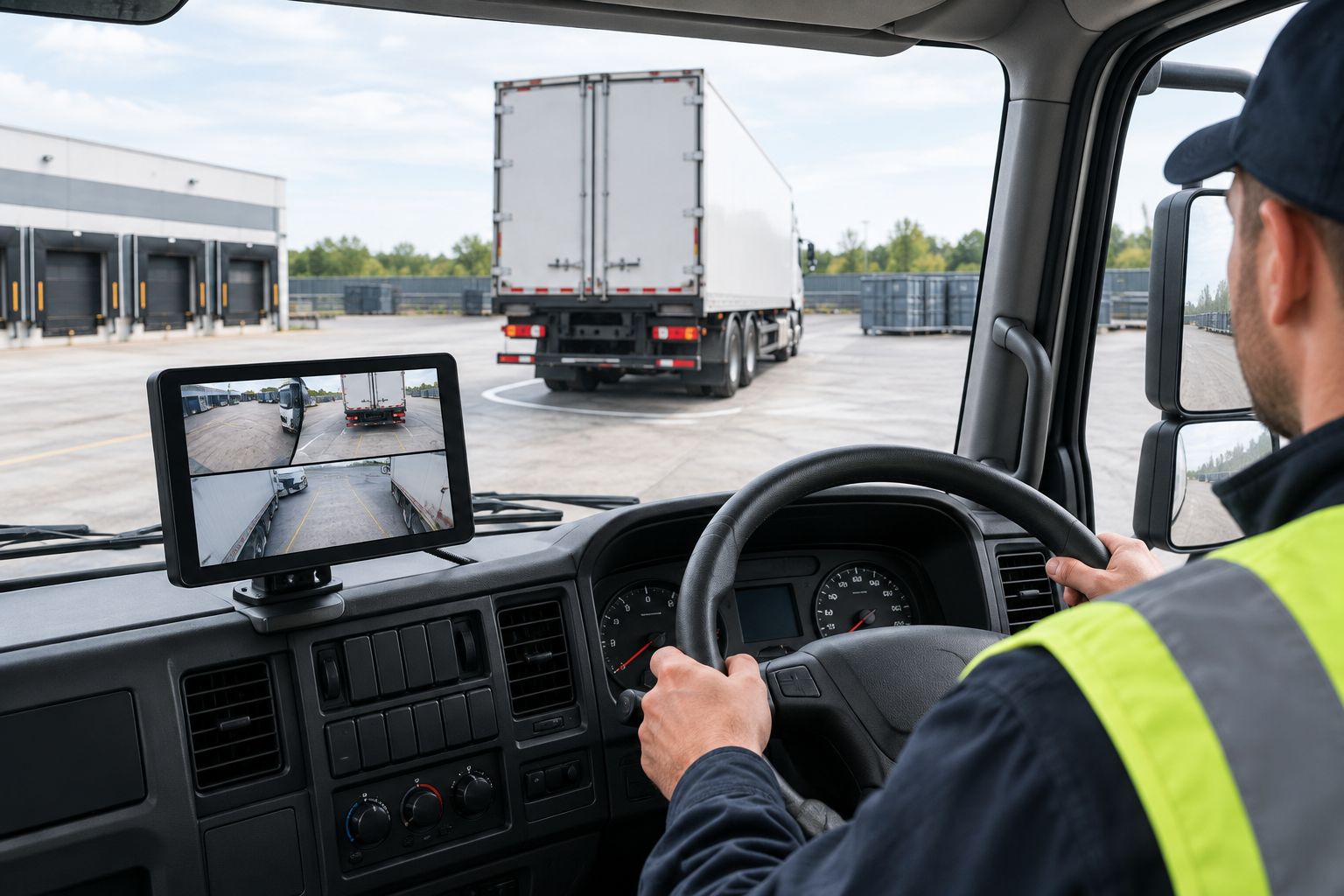
- Confirm the in-cab display shows a clear, correctly oriented view for each camera, not a distorted wide-angle blur
- Crystal Ball's 360 Camera System is built as configurable multi-camera commercial vehicle CCTV, so the camera count and positions are set per vehicle type rather than sold as one fixed kit
- Use weatherproof, vibration-rated housings rated for HGV use, since yard and site work is harder on hardware than motorway running
The 360 Camera System is quote-led, so pricing depends on the exact vehicle and configuration rather than a published headline figure.
Add audible alerts and an in-cab monitor drivers will actually use
A camera feed nobody looks at during the manoeuvre is dead weight. The monitor position and any audible warning matter as much as the camera itself.
- Position the in-cab monitor within the driver's normal sightline during reversing, not tucked below the dashboard
- Confirm audible alarms are loud enough to be heard by people outside the cab in a working yard, not just inside it
- Test alert triggers with a real reversing manoeuvre before signing off installation, not just a static bench test
- Ask drivers which camera view they actually use most and prioritise that view in the default display layout
- Where a configuration includes proximity sensors alongside cameras, confirm audible and visual alerts are triggered together, not one without the other
Build a footage review and incident routine
Cameras only reduce incidents if someone actually watches the footage, not just when a collision has already happened.
- Set a weekly routine for reviewing footage flagged by drivers or yard staff after a near-miss
- Keep a simple log of what triggered each review and what was found, so patterns across drivers or sites become visible
- Understand how 360 vehicle CCTV preserves incident evidence so footage retrieval after a real incident is quick rather than a scramble
- Share relevant clips with drivers as coaching material, not just as evidence for a dispute
- Retain footage according to a written policy rather than an informal habit, since UK law does not set one universal retention period for fleet dash cam or CCTV footage
Train drivers on reversing procedure, not just the equipment
A camera system supports a driver's judgement, it does not replace a reversing procedure.
- Cover the specific blind zones of the vehicle they drive during induction, using the camera views as a teaching tool
- Set a house rule for when a banksman or second person is required alongside cameras, particularly on live sites
- Practice interpreting multi-camera or split-screen views before a driver is signed off on a new vehicle type
- Reinforce that cameras are a check, not a replacement for slowing down and stopping if a view is unclear
Check DVS requirements separately if you run into Greater London
A 360 Camera System and a DVS Kit answer different questions, and mixing them up is one of the most common mistakes fleets make.
- DVS covers the current Greater London HGV Safety Permit requirements: Blind Spot Information System, Moving Off Information System and pictorial warning signage
- A general reversing camera setup does not automatically satisfy DVS, even if it covers similar physical blind zones
- Confirm current vehicle weight thresholds and permit rules directly with Transport for London before assuming a vehicle is exempt
- Treat DVS as a compliance requirement layered on top of general reversing visibility for vehicles operating in the zone, not a substitute for it
Maintain and test the system on a fixed schedule
Camera systems degrade quietly: a cracked lens, a loose bracket or a dead monitor often goes unreported until footage is actually needed.
- Set a scheduled visual check of every camera lens, housing and cable run
- Test the in-cab monitor and audible alerts as part of routine vehicle inspections, not as a separate forgotten task
- Log faults the same way as any other vehicle defect, through the existing defect reporting process
- Keep a record of when each camera was last checked, so gaps in the maintenance routine are visible at a glance
Comparing reversing camera options for HGV fleets
| Option | Best for | Price model | Key limitation |
|---|---|---|---|
| Rear-view camera only | Small rigid fleets doing straight-line reversing on quiet routes | Quote-led | Leaves near-side and cab-height blind spots uncovered |
| Near-side camera add-on | Fleets with frequent kerb-side or yard-edge contact damage | Quote-led | Does not cover the rear reversing arc on its own |
| 360 Camera System (Crystal Ball) | HGV fleets needing full surrounding visibility and recorded incident evidence | Quote-led | Camera count and positioning are configured per vehicle, so scope needs confirming before fitting |
| DVS Kit | HGV operators running into Greater London who need a Safety Permit | Check current price on the DVS page | Meets London compliance requirements, not general reversing visibility on other routes |
A single rear-view camera is a Skip for any HGV doing regular yard or narrow-site reversing in 2026: it covers one blind zone and leaves the near-side and cab-height gaps open.
Common mistakes HGV fleets make with reversing cameras
- Treating one rear-view camera as full blind-spot coverage, when near-side and cab-height zones are just as likely to hide a person or obstacle
- Skipping the post-installation test, so a monitor or alert that does not actually work in a real manoeuvre goes unnoticed for months
- Assuming a DVS Kit or a 360 Camera System automatically covers the other's job, which risks a compliance gap or a false sense of blind-spot coverage
- Ignoring near-misses because no damage occurred, which means the same blind spot causes a real collision later and shows up in HGV operator licence penalty points discussions with the Traffic Commissioner
- Letting footage sit unreviewed until an insurer or client asks for it, instead of using it as routine coaching evidence
FAQ
What’s the best HGV reversing camera system for a mixed fleet?
A configurable multi-camera setup covering near-side, rear and cab-height zones works better across a mixed HGV fleet than a single rear-view unit, because rigid and artic vehicles have different blind spot shapes. Crystal Ball’s 360 Camera System is configured per vehicle type for this reason.
Is a single rear-view camera enough for HGV reversing?
No, a rear-view camera only covers the reversing arc directly behind the vehicle. It leaves the near-side blind spot along the trailer length and the cab-height zone uncovered, both common sites for yard collisions.
Does a 360 degree camera system meet DVS requirements automatically?
No, DVS is a separate Greater London HGV Safety Permit requirement covering Blind Spot Information System, Moving Off Information System and pictorial signage. A general 360 Camera System does not automatically satisfy those specific requirements.
How big is an HGV’s blind spot compared to a van?
An HGV cab sits higher and the trailer is longer, so the near-side and rear blind zones extend further than on a van. The exact area depends on cab height, mirror specification and trailer length, which is why blind spots should be mapped per vehicle type.
Should drivers still use a banksman if the vehicle has cameras?
Many fleets set a house rule requiring a banksman alongside cameras for reversing on live sites or in tight yards. Cameras support a driver’s judgement, they do not replace a second person where the manoeuvre is genuinely difficult.
How is HGV CCTV footage used as evidence after a reversing incident?
Recorded footage is retrieved from the camera system and reviewed to establish what happened, who was involved and whether procedure was followed. It supports insurance claims, client disputes and internal driver coaching.
Does an HGV reversing camera system record continuously?
This depends on the specific system and configuration fitted, so check the current specification for the exact product before assuming continuous recording. Some systems record continuously to a local device, others focus on event-triggered clips.
Do HGVs in London need DVS cameras as well as reversing cameras?
HGVs over the relevant weight threshold operating in Greater London generally need DVS equipment for a Safety Permit, in addition to any general reversing camera coverage used elsewhere in the fleet. Check current thresholds and rules directly with Transport for London.
One last thing
The fleets that actually cut reversing incidents in 2026 are not the ones with the most cameras, they are the ones that review footage after near-misses instead of waiting for a collision. A camera system that nobody watches until something goes wrong is expensive hindsight, not prevention.
Ready to close off HGV blind zones? Request a quote for a 360 Camera System configured to your fleet.
Explore the relevant Crystal Ball solution

Crystal Ball 360° Camera System
Multi-camera commercial-vehicle CCTV configured around the vehicle to support surrounding visibility and recorded incident evidence.
Related guides
- Commercial vehicle CCTV selection checklist
- How to reduce HGV operator licence penalty points
- 360 Camera Systems for tippers and rigid HGVs