 Get in Touch
Get a Quote

Any HGV over 12,000kg entering Greater London needs a DVS HGV Safety Permit from Transport for London, and the permit depends on the vehicle's Direct Vision Standard star rating. Vehicles rated 0 to 2 stars only qualify once a Progressive Safety System is fitted, while 3 to 5 star vehicles can usually get a permit without extra equipment. Since 28 October 2024, that 3-star threshold has applied to every HGV wanting an automatic permit, and it still governs applications in 2026.
- The DVS HGV Safety Permit is a free Transport for London permit required for HGVs over 12,000kg operating in Greater London.
- Vehicles rated 0 to 2 stars on the Direct Vision Standard need a Progressive Safety System fitted before TfL will issue a permit.
- Since 28 October 2024, only HGVs rated 3 stars or higher get an automatic permit without extra safety equipment.
- Driving in the zone without a valid permit is enforced by camera and results in a Penalty Charge Notice.
- Crystal Ball’s camera and sensor equipment supports the Progressive Safety System side of a DVS application.
Why this matters
Operators who assume DVS is a one-off box to tick usually get caught out at renewal or when adding a new vehicle to the fleet. The star rating attached to a chassis does not change, but the equipment needed to keep it compliant can, especially as TfL periodically tightens minimum requirements. Getting the process wrong risks a vehicle sitting idle rather than earning revenue in London.
A DVS compliance audit checklist is worth running before you assume every vehicle on the fleet still qualifies, particularly if any HGVs were bought second-hand or moved between depots in 2026.
How does the DVS HGV Safety Permit work?
The process runs through TfL's online system and follows the same order for every operator:
- Find the vehicle's Direct Vision Standard star rating using its Vehicle Identification Number (VIN) on TfL's checker tool.
- If the rating is 3 stars or above, apply for the permit directly. No extra safety equipment is required to pass this stage.
- If the rating is 0 to 2 stars, fit an approved Progressive Safety System before applying, since the permit will not be granted on the star rating alone.
- Submit the permit application with evidence of the fitted equipment where required.
- Display the permit reference correctly and keep records in case of a roadside or camera-based check.
The permit is free to apply for. There is no charge from TfL for the application itself, though fitting a Progressive Safety System has its own cost separate from the permit.
What do the direct vision star ratings mean?
Every HGV design is assessed on how much of the road, cyclists and pedestrians the driver can see directly through the cab windows and mirrors, without relying on cameras or sensors. That assessment produces a rating from 0 stars, meaning almost no direct view of vulnerable road users close to the cab, up to 5 stars, meaning a design with wide-glazed, low cabs and minimal blind spots.
Older cab-over designs common on older tippers and rigid trucks tend to sit at 0 or 1 star. Newer HGVs designed with DVS in mind, including some models with lowered dashboards and additional glazing, can reach 3 stars or higher without any retrofit work.
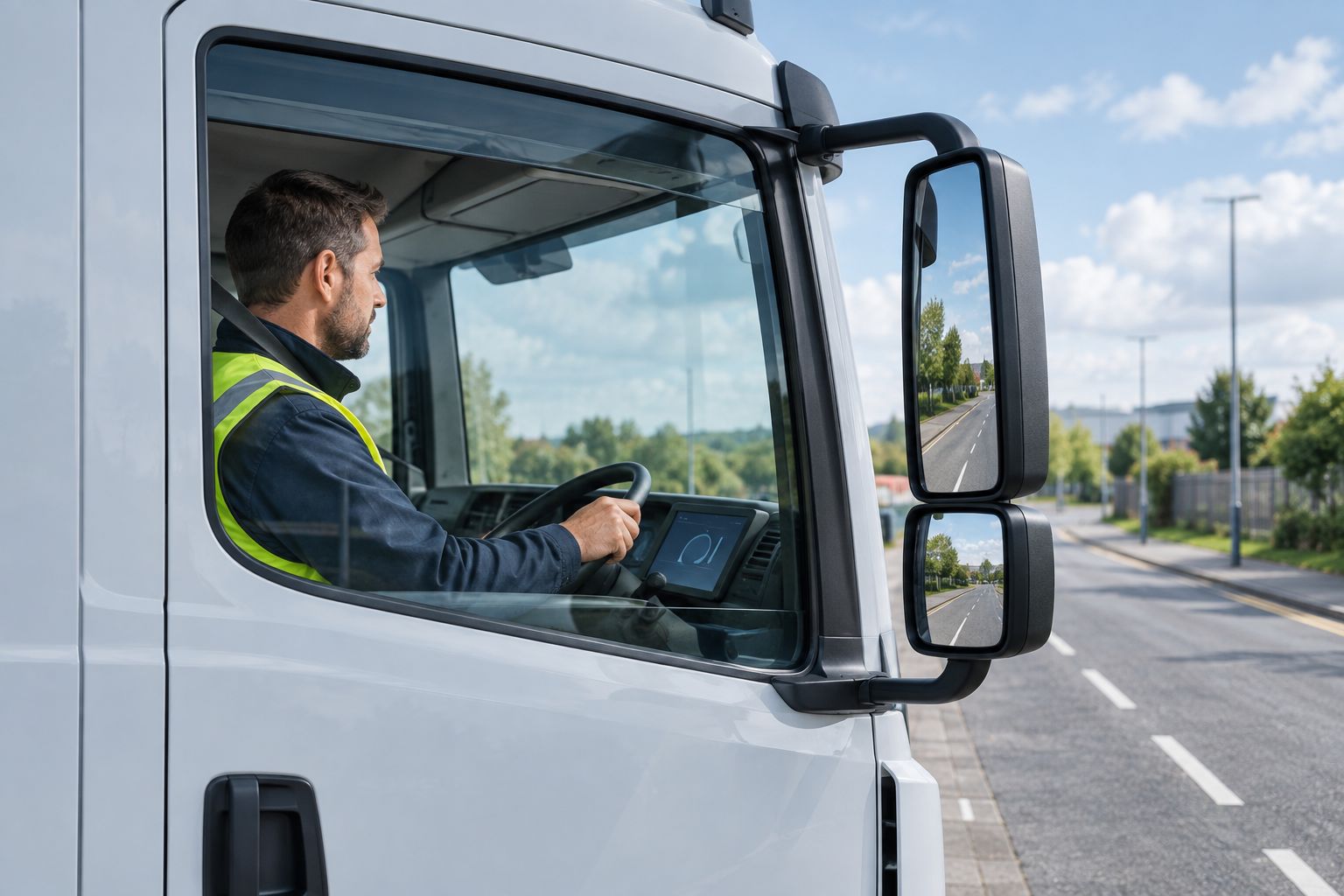
0-2 star HGVs vs 3-5 star HGVs: what changes for the permit
The star rating decides which route to a permit applies. This table sets out the practical difference for an operator applying in 2026.
| Star rating | Permit route | Extra equipment needed |
|---|---|---|
| 0 star | Progressive Safety System required | Camera monitor, sensors, warning system, signage |
| 1 star | Progressive Safety System required | Camera monitor, sensors, warning system, signage |
| 2 star | Progressive Safety System required | Camera monitor, sensors, warning system, signage |
| 3 star | Automatic permit | None required for the rating itself |
| 4 star | Automatic permit | None required for the rating itself |
| 5 star | Automatic permit | None required for the rating itself |
A 0-star HGV can still legally operate in Greater London in 2026, but only once the correct Progressive Safety System is fitted and the permit application reflects that equipment. Fitting the equipment does not raise the vehicle's underlying star rating; it opens the alternative route to a permit.
Why Progressive Safety System requirements vary between vehicles
The exact equipment an operator needs to fit is not identical across every 0 to 2 star HGV. Several factors affect the specification:
- Cab shape and existing blind spots determine how many camera positions and sensors are genuinely needed to cover vulnerable road users.
- Whether a near-side camera or a full Camera Monitoring System is already fitted from the manufacturer changes what still needs adding.
- Vehicle length and turning behaviour affect where a Moving Off Information System and Blind Spot Information System need to sense.
- Existing signage condition matters because pictorial warning signage requirements must be current and correctly positioned, not just present somewhere on the vehicle.
- Fleet age and refit history influence whether older equipment on a vehicle still meets the current specification or needs replacing.
How do I check my HGV's star rating?
Check the star rating by entering the vehicle's VIN into TfL's official Direct Vision Standard checker before assuming a purchase or an existing vehicle qualifies. The checker returns the manufacturer-assessed rating for that exact vehicle configuration, which can differ between trims of the same model.
Is the DVS Safety Permit free to apply for?
The DVS Safety Permit is free to apply for through TfL, and there is no permit fee at any star rating. The cost that operators actually face sits in fitting a Progressive Safety System on 0 to 2 star vehicles, not in the permit process itself.
What happens if I drive without a valid DVS permit?
Driving an HGV over 12,000kg into Greater London without a valid permit is enforced through TfL's camera network and results in a Penalty Charge Notice. The enforcement runs continuously across the zone, so an unregistered vehicle is not relying on a roadside stop to be caught.
Where Crystal Ball fits into a DVS application
Crystal Ball supplies the camera, sensor and monitoring equipment that forms part of a Progressive Safety System for 0 to 2 star HGVs, alongside its 360° Camera System equipment for DVS permits. The system is configured per vehicle, since blind spot coverage and camera positioning differ between a rigid tipper and a longer artic. Fleet operators still need to confirm the star rating and submit the permit application through TfL separately; Crystal Ball's role is the equipment side of the requirement, not the permit itself.
FAQ
How much does a DVS HGV Safety Permit cost in 2026?
The DVS HGV Safety Permit is free to apply for in 2026, with no TfL charge for the application or renewal. Fitting a Progressive Safety System on a 0 to 2 star HGV is a separate equipment cost outside the permit fee itself.
Which HGVs need a DVS Safety Permit?
Any HGV over 12,000kg gross vehicle weight needs a DVS Safety Permit to operate in Greater London. Lighter vans and cars fall outside the scope of the Direct Vision Standard.
What is a Progressive Safety System?
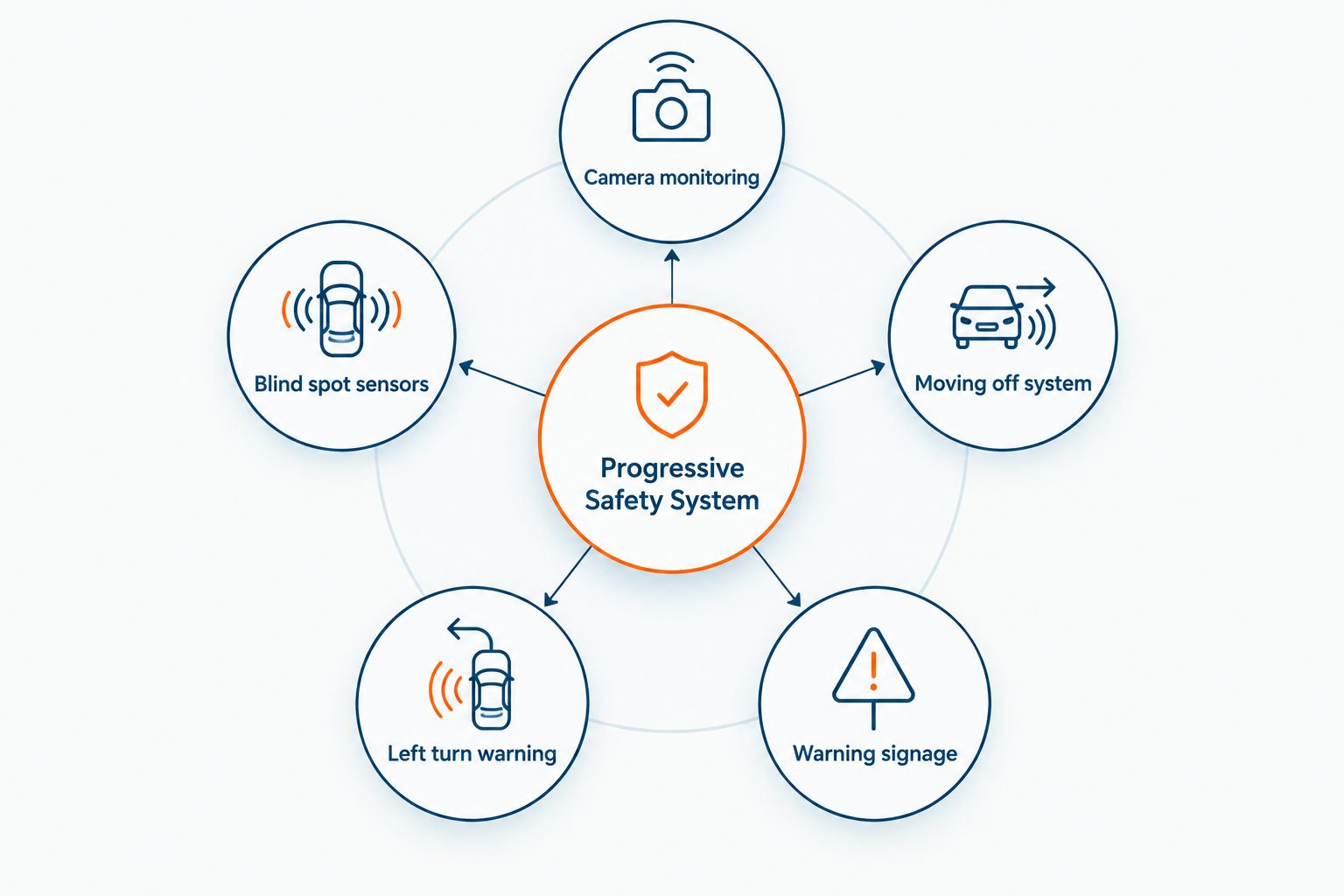
A Progressive Safety System is the combination of camera monitoring, sensors, warning devices and pictorial signage that lets a 0 to 2 star HGV qualify for a DVS permit. It does not change the vehicle’s underlying star rating.
Is the DVS Safety Permit the same as the London Low Emission Zone permit?
No, the DVS Safety Permit and the London Low Emission Zone are separate schemes with separate requirements. An HGV can need both a DVS permit and to meet emissions standards to operate legally in Greater London.
How long does a DVS Safety Permit last?
TfL issues DVS Safety Permits for a set validity period rather than indefinitely, so operators need to reapply before the current permit lapses. Check the exact renewal timing on TfL’s own permit portal, since it can be updated.
Can I check an HGV’s star rating before buying it?
Yes, TfL’s Direct Vision Standard checker returns the star rating for a specific VIN before purchase. This avoids buying a vehicle that turns out to need a Progressive Safety System fitted before it can operate in London.
Does DVS apply outside Greater London?
No, the DVS HGV Safety Permit only applies to HGVs operating within Greater London. HGVs operating solely outside the zone are not required to hold one.
What equipment counts toward a Progressive Safety System?
A Progressive Safety System typically includes a camera monitoring system, a Moving Off Information System, a Blind Spot Information System, an audible left-turn warning and pictorial warning signage. Each element has its own specification that must be met, not just installed.
One last thing
Operators often fit camera and sensor equipment and assume the permit follows automatically. It does not: the equipment only opens the application route for 0 to 2 star vehicles, and TfL still needs the actual permit application submitted with evidence attached before that HGV can legally operate in Greater London.
Need to fit a Progressive Safety System before your next DVS renewal? Request a Quote for Crystal Ball's DVS Kit equipment.
Explore the relevant Crystal Ball solution

Crystal Ball Direct Vision Standard Kit
Progressive Safe System equipment for relevant HGVs operating in Greater London.
£599 INCLUDING VAT FOR EQUIPMENT. INSTALLATION IS PRICED SEPARATELY WHERE REQUIRED.
Related guides