 Get in Touch
Get a Quote

Questions to ask a TfL-approved dash cam installer cover camera approval status, fitting experience, positioning, footage access and paperwork, and getting these answered before booking protects a licensed taxi or private hire vehicle from failing an inspection over a badly fitted camera.
- TfL-approved dash cam installer questions should cover approval status, fitting experience, footage access and paperwork before booking in 2026.
- Verdict: confirm the exact camera model against TfL’s current approved list before any installer touches the vehicle.
- Ask for proof the installer has fitted TfL-approved cameras into licensed vehicles before, not just general dash cams.
- Multi-vehicle fleets need consistent fitting standards across every vehicle, not a good fit on one van and a poor one on the rest.
- Get the approval reference, fitting date and mounting position in writing, useful evidence if a licensing officer asks questions.
Why installer questions matter for licensed taxi and PHV operators
Incorrect equipment or positioning can create inspection and licensing problems. Confirm the exact approved model, vehicle category, fitting requirements and documentation before installation.
An installer who has not worked on licensed vehicles before may not know the mounting position, angle or documentation a licensing officer expects to see. Getting this wrong after fitting means a second visit, a delayed inspection, or in some cases a vehicle off the road until it is corrected. Asking the right questions before booking removes most of that risk.
This matters more for operators running several vehicles. One correctly fitted camera does not guarantee the next one in the fleet is fitted the same way, and a mixed standard across a fleet in 2026 is harder to explain to a licensing officer than a single vehicle issue.
Confirm the camera model's current TfL approval
Do not take an approved label on the box at face value. Ask the installer to show you exactly where the model sits on TfL's published list.
- Ask for the specific approval reference, not a general manufacturer claim
- Confirm the approval covers your exact vehicle category, taxi or private hire vehicle
- Ask how the installer checks approval status before every fitting, not just once
- Ask what happens if that model is later removed from the approved list
- Check whether the TfL-approved dash cam quote checklist items have already been covered in your quote
Check the installer's experience with licensed vehicles
A general auto-electrician may never have fitted a camera into a vehicle that faces a licensing inspection. That experience gap shows up at the worst possible time.
- Ask how many licensed taxis or PHVs they have fitted this type of camera into
- Ask if a vehicle they fitted has passed a licensing inspection first time
- Ask for a reference from another local operator, not just a manufacturer
- Ask whether they know the mounting position licensing officers commonly check
Clarify camera positioning and field of view
Positioning is one of the most common reasons a fitted dash cam raises a question at inspection. Get this confirmed before the camera goes in, not after.
- Confirm the front-facing angle covers the windscreen without blocking the driver's view
- Confirm whether a passenger-facing angle is required for your licence type
- Check the number of cameras matches the specification for that specific approval
- Ask if the mounting position affects number plate visibility from outside the vehicle
Ask whether the installer works within an established fitting network
A fleet-focused installer network, rather than a one-off local fitter, tends to apply the same standard across every vehicle. That consistency matters once you run more than one vehicle.
- Ask if fitting standards are documented and applied the same way at every location
- Ask if the same team can fit additional vehicles as your fleet grows
- Ask for the same fitting confirmation paperwork on every vehicle, not just the first
- Compare this against the 4G dash cams for taxi and private hire fleets options available to you before choosing an installer
Ask about footage access, storage and retention
Footage questions get overlooked until an incident happens and someone needs the recording quickly. Ask before fitting, not after.
- Ask exactly how footage is retrieved after an incident
- Ask whether footage is stored on-device, in the cloud, or both
- Ask how long footage is retained by default and whether that is adjustable
- Ask who has authority to request footage from the vehicle
- Read the detail on TfL-approved dash cam footage access before you sign anything
Confirm installation warranty and post-fit support
A fitting issue that surfaces weeks later should not be your problem to chase alone. Get support terms confirmed at the point of booking.
- Ask what the warranty covers: the camera hardware, the fitting, or both
- Ask who to contact if a fault affects a licensing inspection outcome
- Ask whether re-fitting is offered if the vehicle is replaced or re-registered
- Ask the expected turnaround if the camera needs a repair or replacement
Get compliance documentation in writing
A verbal assurance will not help you at a licensing check. Paperwork will.
- Get written confirmation of the exact model fitted and its approval reference
- Get a fitting invoice or certificate showing the date and method used
- Get a written note of the mounting position and camera count fitted
- Keep a copy of any manufacturer compliance letter supplied with the camera
Comparing installer options for licensed taxi and PHV operators
The right installer type depends on how many vehicles you are fitting and how much consistency you need across a fleet.
| Installer type | Best for | What to verify | Key limitation |
|---|---|---|---|
| Independent auto-electrician | Single vehicle owner-operators | Camera model is currently on TfL's approved list and the installer has fitted licensed vehicles before | May not scale easily if you add more vehicles later |
| Franchise or dealer fitting centre | Operators buying through a vehicle dealership | Warranty terms and whether fitting is bundled with the vehicle purchase | Camera choice can be limited to the dealer's own stock |
| National fleet camera installer network | Multi-vehicle taxi and PHV fleets | Consistent fitting standards and paperwork across every location | Booking lead times can be longer during busy periods |
| Self-fit | Operators comfortable with vehicle wiring | Whether self-fitting affects the approval or the manufacturer's warranty | Higher risk of a positioning error that raises questions at inspection |
Verdict: choose an installer who can evidence the exact current approval, suitable positioning, footage-access process and fitting documentation for the vehicle. The correct choice depends on the approved model and vehicle category, not whether the installer is national or independent.
Crystal Ball supplies TfL-approved vehicle CCTV within its wider fleet-technology range. Where other fleet capabilities are needed, SmartCam 4G may complement the approved camera, but only the functions verified for each exact product should be attributed to it.
Check the right camera for your vehicle
Speak to the Crystal Ball team about TfL-approved dash cam fitting for licensed vehicles.
Common mistakes licensed operators make
- Assuming any dash cam described as 4G or HD is automatically TfL-approved, when approval applies to named models only
- Booking the cheapest fitter without checking they have worked on licensed vehicles, then finding a mounting issue at inspection
- Not keeping written proof of the approval reference and fitting date, leaving nothing to show a licensing officer
- Treating footage access as an afterthought and only asking about retrieval after an incident has already happened
- Rolling one camera model across a mixed fleet without confirming the approval covers every vehicle type in that fleet
FAQ
What questions should I ask before booking a TfL-approved dash cam installer?
Ask for the camera’s exact approval reference, the installer’s experience fitting licensed vehicles, confirmed camera positioning, footage access and retention details, and written fitting documentation. These cover the areas most likely to cause a problem at a licensing inspection in 2026.
Is every dash cam installer qualified to fit a TfL-approved camera?
No. General auto-electricians can fit hardware correctly but may not know the mounting position or documentation a licensing inspection expects. Ask specifically about their experience with licensed taxis or private hire vehicles before booking.
Does a TfL-approved dash cam cover both taxis and private hire vehicles?
Approval is model-specific and tied to a vehicle category, so a camera approved for one licence type is not automatically approved for another. Confirm the approval covers your exact vehicle category before fitting.
Can I fit a TfL-approved dash cam myself?
Self-fitting carries a higher risk of a positioning error that raises questions at inspection. Check with the manufacturer and your licensing authority whether self-fitting affects the approval or the warranty before attempting it.
How do I check if a dash cam model is currently on TfL’s approved list?
Ask the installer to show you the exact listing rather than relying on packaging wording. Approved lists change, so check the current status on the day of fitting rather than from an older reference.
What happens if my dash cam is not correctly fitted?
An incorrectly positioned or unapproved camera can raise a question during a vehicle licensing inspection and, in some cases, delay it. Getting the fitting checked and documented properly beforehand avoids that delay.
How long should dash cam footage be retained for a licensed vehicle?
UK law does not set one universal retention period for fleet dash cam footage. Retention should be linked to a documented purpose and current data protection requirements, so ask the provider what period their system applies by default and whether it is adjustable.
Does Crystal Ball supply a TfL-approved dash cam?
Yes, Crystal Ball supplies a TfL-approved dash cam for licensed vehicles, kept separate from its SmartCam 4G video telematics product. Check the current approval, vehicle category and features on the relevant Crystal Ball page before booking a fitting.
One last thing
TfL's approved products list is not fixed. A model listed in a previous year is not guaranteed to still be listed in 2026, which is why the installer confirming current approval on the day of fitting matters more than any claim printed on the box. Make that the first question you ask, before positioning, warranty or anything else.
Related guides
- Best dash cam systems for taxi fleets
- Dash cam footage retention for UK fleets
- Company vehicle dash cam policy
Explore the relevant Crystal Ball solution
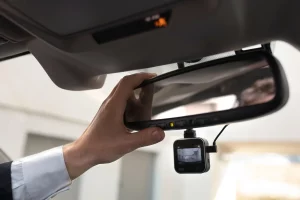
Crystal Ball TfL-Approved Camera System
CONFIRM THE CURRENT APPROVED MODEL
Confirm the exact camera model, approved category, fitting and access process before installation.
PRICE PROVIDED BY QUOTE