 Get in Touch
Get a Quote

Access to footage from a TfL-approved taxi or private-hire CCTV system depends on the approved equipment, the operator’s role as data controller and the reason for the request. The process should be documented before the camera is used, rather than invented after an incident.
- TfL’s approved list dated 20 February 2026 names Crystal Ball Smart Cam equipment for private-hire vehicles.
- The driver or operator responsible for the system is also responsible for handling its footage and data-protection duties.
- Passengers requesting images of themselves should contact the operator or driver identified on the in-vehicle signage.
- Do not transfer SmartCam 4G portal, tracking, Driver Score or digital-check functions to the TfL-approved camera category unless current sources confirm them for that exact approved system.
Confirm the exact approved system first
Transport for London publishes a current list of approved CCTV systems and installers. The list updated on 20 February 2026 names Crystal Ball and identifies Smart Cam equipment for private-hire vehicle use, including a JC400 forward and interior dual camera and an L2010 rear-facing camera.
Approval is model and vehicle-category specific. Do not assume that every Crystal Ball dash cam, every camera combination or every London vehicle is covered by the same approval. Record the exact model and approved vehicle category before fitting or writing an access policy.
Who is responsible for the footage?
TfL explains that taxi and private-hire services are run by independent drivers and operators. Where they install CCTV, the individual driver or operator is responsible for that system and the personal data it records.
This means the responsible data controller should define:
- why footage is recorded;
- which approved equipment is fitted;
- who may retrieve or view recordings;
- how requests are verified and logged;
- how footage is shared securely;
- how long ordinary and preserved recordings are kept;
- how people can request images of themselves.
TfL also says the data controller’s identity and contact details should appear on signage inside the vehicle. Approved signage is not optional presentation. It tells passengers who is responsible for the recording and how to contact them.
A practical footage-access process
1. Record the request
Write down the requester, date, time, vehicle, incident and purpose. Do not search a broad period without a specific reason.
2. Confirm the requester’s authority
A request may come from the police, an insurer, TfL, a passenger, a driver or an authorised colleague. The data controller should assess the legal basis and information needed before disclosure. A request does not automatically justify sending an unredacted copy to everyone who asks.
3. Locate the correct recording
Use the approved manufacturer’s retrieval process for the exact system fitted. TfL’s public approval list confirms models and vehicle categories, but it does not provide one universal footage-download method for every approved product.
4. Protect the original evidence
Keep the original file unchanged where footage relates to an incident, complaint or claim. Work from a controlled copy if redaction or another processing step is required.
5. Share it securely
Use an approved secure method and send only the footage needed for the documented purpose. Record what was shared, with whom and when.
6. Review retention
Ordinary recordings should not be retained indefinitely. Preserve a relevant clip where a valid incident, claim or request requires it, then review deletion when the purpose ends.
Requests from passengers and drivers
TfL’s CCTV and surveillance guidance states that a person seeking images of themselves from a taxi or private-hire vehicle should contact the company or driver operating that vehicle. The relevant details should be available on the signage inside it.
The data controller must then handle the request under the applicable data-protection rules. Other people shown in the footage may need to be protected before a copy is released. Obtain data-protection advice where the request is complex.
Connect the right Crystal Ball capabilities
The TfL-approved taxi and private-hire camera category can sit within a wider Crystal Ball fleet-management approach. Its verified role is approved in-vehicle CCTV for the exact listed model and vehicle category.
Where a fleet also needs tracking, video telematics, on-demand portal footage or supported driver-behaviour information, SmartCam 4G can add those verified capabilities. This gives managers a broader operational picture without attributing SmartCam functions to the TfL-approved model.
For relevant HGVs in Greater London, the DVS Kit adds the required Progressive Safe System equipment and permit support. These complementary products can improve visibility, transparency, safety and control across a mixed fleet while retaining the correct approval and compliance boundaries.
Questions to settle before fitting
- What is the exact approved model?
- Which taxi or private-hire vehicle category does TfL approve it for?
- Who is the data controller?
- What signage must be displayed?
- What is the lawful purpose for recording?
- Who can access footage and for which reasons?
- How is footage securely retrieved and shared?
- What retention period applies?
- How will requests from passengers or drivers be handled?
- What happens if the vehicle, camera model or configuration changes?
FAQ
Is Crystal Ball listed by TfL as an approved CCTV supplier?
Yes. TfL’s approved list updated on 20 February 2026 names Crystal Ball and identifies Smart Cam equipment approved for private-hire vehicles. Approval is tied to the listed model and category.
Can a fleet manager browse TfL-approved camera footage whenever they want?
Access must follow the data controller’s documented purpose, permissions and data-protection process. TfL does not publish a general right for unrestricted browsing.
How does a passenger request footage showing them?
TfL says the passenger should contact the company or driver operating the vehicle. The data controller’s contact details should be displayed on the in-vehicle CCTV signage.
Does TfL publish one download process for every approved camera?
No. The public approval list identifies approved equipment and categories. Retrieval should follow the process for the exact approved system fitted.
Is a TfL-approved camera the same as SmartCam 4G?
No. They have different but complementary roles. The approved camera covers its listed taxi or private-hire category, while SmartCam 4G adds wider fleet tracking and video-telematics capabilities where needed.
Is TfL-approved taxi CCTV part of DVS?
No. DVS serves a different but complementary role by adding the HGV safety-permit and Progressive Safe System requirements for relevant vehicles in Greater London.
Build access rules before the first request
The most reliable process starts with the exact approved model, a named data controller, clear signage and a documented method for retrieval, disclosure and deletion. Confirm these details with Crystal Ball and current TfL guidance before installation.
Contact Us to confirm the current Crystal Ball TfL-approved model and footage-access process for your vehicle.
Explore the relevant Crystal Ball solution
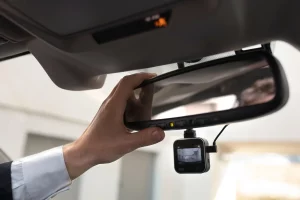
Crystal Ball TfL-Approved Camera System
Confirm the exact camera model, approved category, fitting and access process before installation.
PRICE PROVIDED BY QUOTE